
Where every kid learns that the verb is the word.
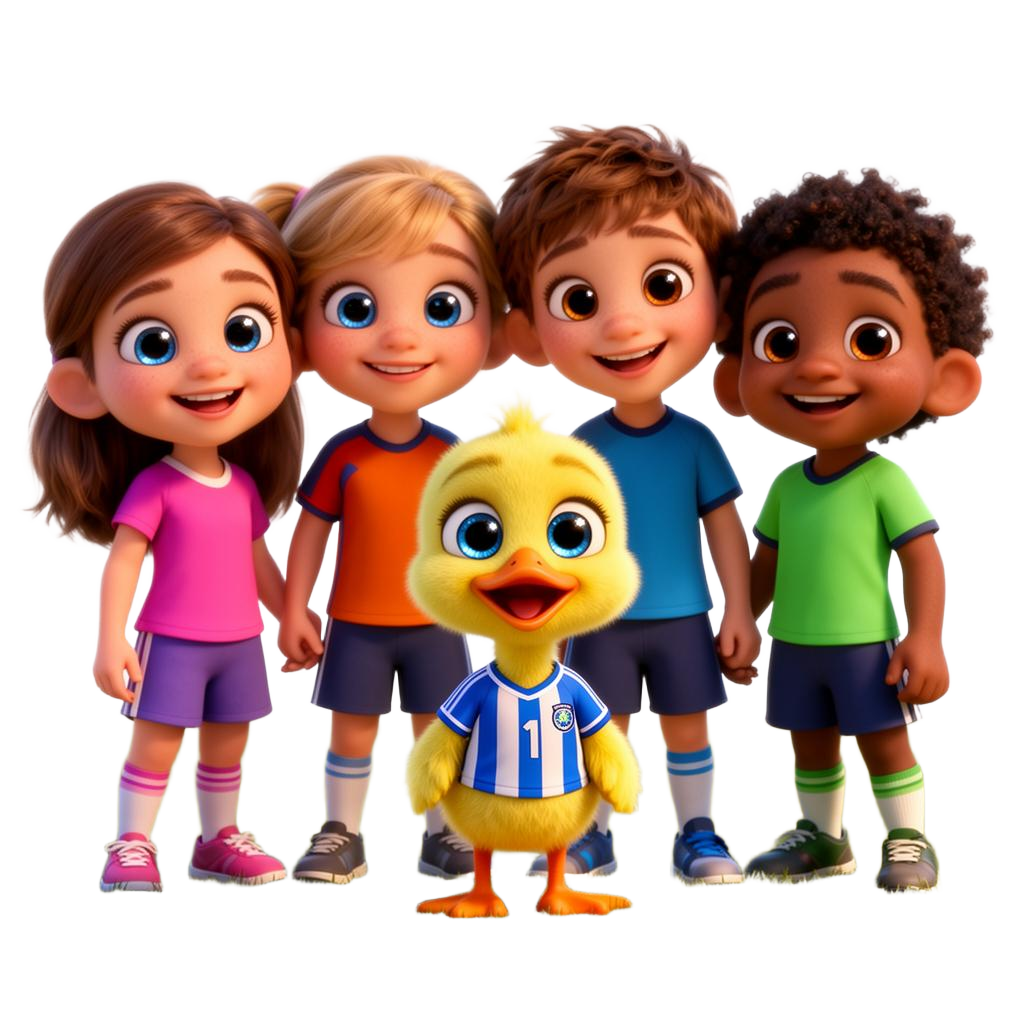
A bright, classroom-ready game that teaches verbs to children ages 3–8 through a friendly soccer-field story with Maya, Lily, Theo, and Ducky.

Quick answers for busy teachers
Which grades is this for?
Designed for ages 3–8 — PreK through 2nd grade. Read-aloud friendly for the youngest learners; independent play for 1st and 2nd grade.
What does the game teach?
The definition of a verb, how verbs work in sentences, and five types: action, linking, modal, auxiliary, and compound verbs.
How long does it take?
About 10–15 minutes to play through every level. Each level is short enough to fit into a warm-up or station rotation.
Can I use it quickly in class?
Yes — no setup, no accounts, no logins. Tap Start Playing, project it, and go. Works on Chromebooks, iPads, and interactive whiteboards.
What devices does it work on?
Any modern browser — Chrome, Safari, Edge, Firefox. Chromebooks, iPads, Windows laptops, Macs, and interactive whiteboards all work great.
How do I set it up for my class?
Open the site, tap Start Playing, and project or share your screen. Students can answer aloud, raise hands, or come up one at a time — no individual devices needed.
How does scoring work?
Students earn a star for each correct answer. There is no timer pressure, and wrong answers show a friendly try-again hint so every child feels successful.
Classroom setup checklist
- 1Open the site and tap Start Playing.
- 2Project or share your screen with the class.
- 3Choose a level and read the first question aloud.
- 4Students answer aloud, raise hands, or come up one at a time.
- 5Tap the correct answer together and celebrate the star!
- 6Move to the next level or replay for review.
What’s inside the game
Six bite-size levels, each guided by one of the four friends, with multiple-choice questions tied to what’s happening on the soccer field.
What is a Verb?
The core definition with simple, kid-friendly examples.
Action Verbs
Name what the background players are doing — run, kick, catch.
Linking Verbs
Words like is, am, are, seems — they link, they don’t act.
Modal Verbs
Helper words for ability and possibility: can, should, must.
Auxiliary Verbs
Forms of be, have, and do that help the main verb.
Compound Verbs
Two verbs as a team — has played, will kick, is running.
No ads. No accounts. No student data.
Everything — nicknames, stars, scores — stays in the browser on the child's device. Nothing is ever sent to us, so there is nothing to sign up for, allowlist, or worry about. Safe for COPPA and FERPA-minded classrooms.
Ready when you are.
Take your class to the soccer field and let Ducky do the teaching.
Keep the verb fun going
For further learning fun, get the book — more verb stories to read together and plenty of chances to spot the word that does the doing.